

Hunting Spain: From Uncertainty to Success in the Mountains
By Jeff Swehla, Lansing SCI Board Member and Avid Hunter
A Hunt Thrown Into Uncertainty
It was Oct 2022, just a few weeks prior to our departure, when we received terrible news. My long time hunting buddy, Jeff, and I received a message from an unknown number inquiring about our planned hunt in Spain. After a few messages back and forth we had sadly learned that our guide and well respected hunter, Martin Rodriguez with Adictosacazar had unexpectedly passed away while on a wild boar hunt. We had just mailed the balance of our planned hunt and it was now unknown what would come next. Would we receive refunds? Would our deposits be lost? Would we be able to reschedule with another guide from the same outfitter?
New Leadership and a Second Chance at Spain
Fortunately, a good friend of Martin, Daniel (Dani) Martí picked up our hunting plans and honored our contracts with his hunting organization, Caza Sopié y Sabana. Thankfully, we were able to reschedule our hunt for Nov 2025. The delays were due entirely on our part due to other hunting plans in West Texas and South Africa.
Arrival in Spain and the Start of the Adventure
Come November 2025, we were again faced with uncertainty. This time due to the US Government shutdown and lack of air traffic controllers and TSA agents. Thankfully, our flights to Madrid went without incident. Upon arriving in Madrid, we were promptly greeted by our guide, Moisés, for our pursuit of Beceite and Southeastern Ibex. We would later the following week connect with Dani as we looked to hunt Red Deer. Since we elected to not bring our own rifles and instead use those provided by Dani, we were immediately able to start hunting that same evening.
Beceite Ibex in the Hills Near Valencia
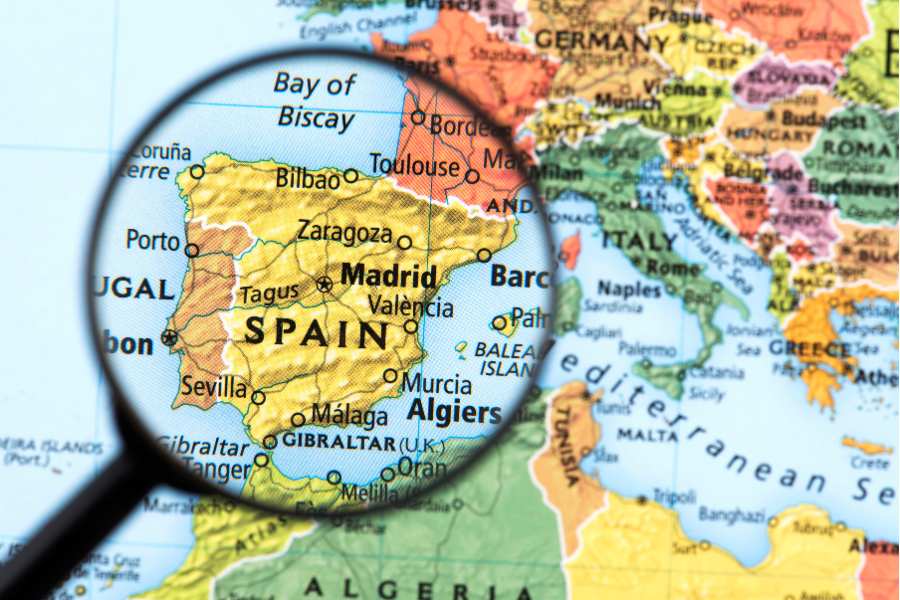
Our hunt for Beceite Ibex took place about 3 hours southeast of Madrid near Valencia. As an added bonus, the famous Valencia oranges were in season and we were able to enjoy some of the freshest, best tasting oranges the world can offer. The landscape was beautiful and aromatic, littered with Kermes Oak, European Fan Palm and a variety of flowering plants including Rosemary. A number of the plant species bore pickers and I was glad to have brought gaiters to help fend them off.
Battling Wind, Distance, and Time
The Ibex rut was in effect and we immediately spotted a good male to pursue. Jeff was up first to fill his tag. Unfortunately, he was not able to get a steady rest for what would have been a 400 yard shot with the Tikka 270 Win and nightfall would come too soon to be able to close the distance. The following morning after breakfast, we again returned to the same area however we had an added challenge to this days hunt. The weather forecast called for 20+ mph winds with significant gusts. We spent the morning finding a comfortable location out of the wind and glassed for a possible pursuit. Unfortunately, only females and smaller males were spotted.
Success in the Canyon
After a lunch back in town we travelled to a nearby canyon and spotted multiple Ibex but again were limited to females and smaller males. After making our way along the side of the canyon ridge, we spotted a good male and Jeff was able to make a perfect shot on his target with no tracking needed. We spent the next few hours finishing up with all of the after the shot work.
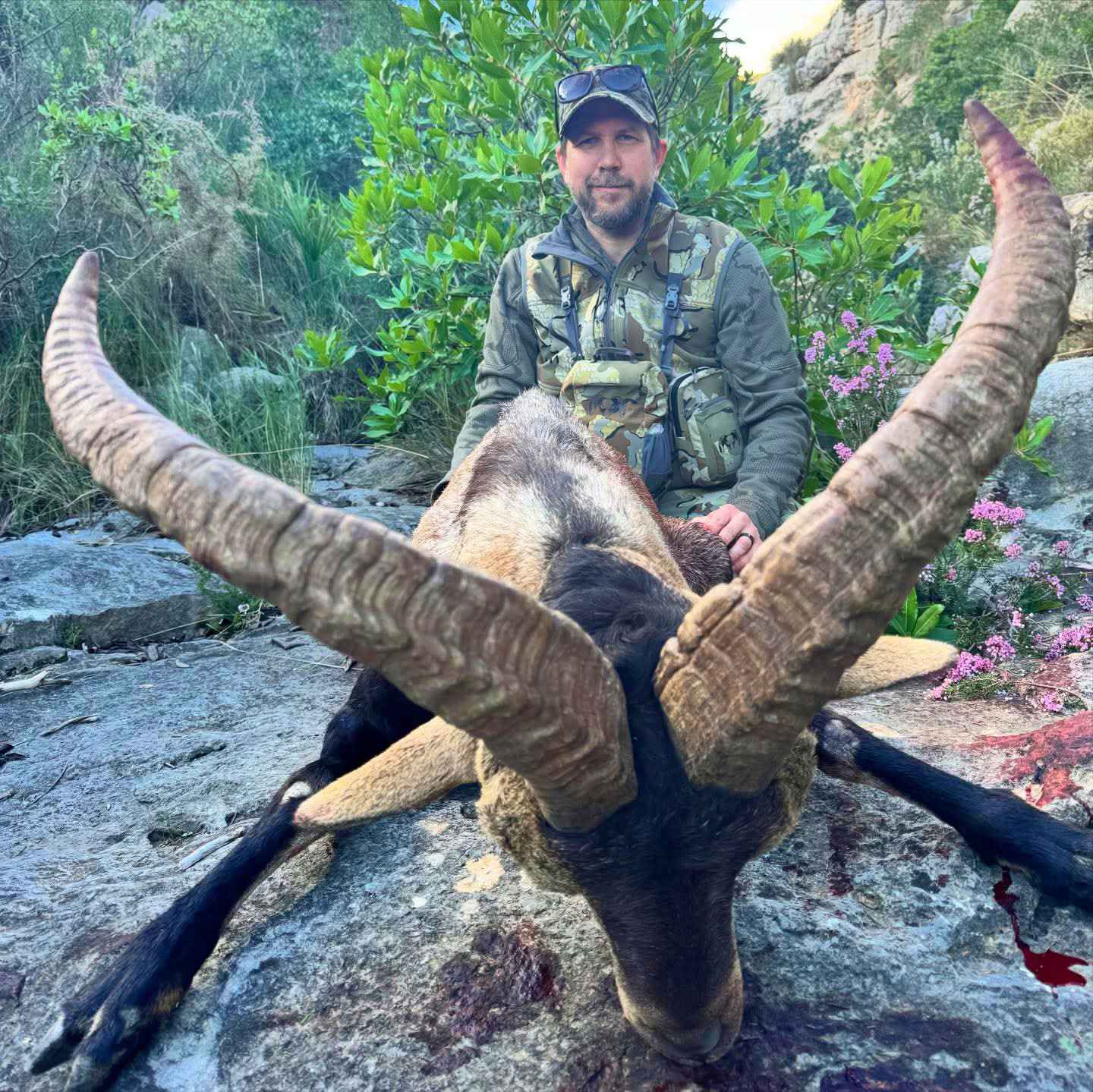
My Beceite Ibex: A Hard-Earned Morning
With little light remaining in the day we made a best effort at trying to locate a male for me to pursue the following morning. Ibex are typically diurnal, meaning they are active during the day, but rarely travel at night. After some fast footwork climbing, descending and ascending again to the next ridge, we spotted a very good male directly across to the next mountainside. He was broadside offering an ideal opportunity for a shot other than the long distance and wind conditions which had continued to pick up from earlier in the day.
Transitioning to Southeastern Ibex Country
The next morning we immediately set out and started our trek to the area where we had last seen him before nightfall. As expected, we found him standing in the morning light no more than 50 yards from where we had seen him the prior evening. He was approximately 350 yards away and again the wind conditions were awful however at a headwind. I was able to get prone from our position and delivered a shot which would send him directly down the mountainside deep in a ravine where the oaks grew much larger and heavier likely attributed to the protection from constant winds and receiving more water funneled from the surrounding landscape. This made the tracking and recovery process quite an effort.
High Elevation, Low Visibility, and Silent Stalks
After taking photos and preparing for the pack out, we checked out of our hotel and immediately prepared for our next leg of the hunt which involved driving 3.5 hours southwest for the Southeastern Ibex. The landscape significantly changed with much more rugged terrain dominated with large pines and a marked increase in elevation and corresponding drop in temperature.
A Close-Range Opportunity
The game seen also changed from Partridge, Roe Deer and of course Beceite Ibex to Red Deer, Fallow Deer, Southeastern Ibex and Wild Boar. We picked up a local guide in a nearby town who knew of a good area which was good for Ibex at the very peak of a mountain. Looking at the forecast, we knew it was important to make the most of our time hunting this evening as the area in which the larger Ibex reside is high up near the cloud line and with the rain prediction the following day, the clouds would be very low making visibility impossible. The area was very reminiscent of mountain goat hunting in Alaska bringing back fond memories of past hunts.
We spotted several Ibex on our hike up as well as a few wild boar. Once again, the Ibex were limited to females and smaller males. The Ibex population has been under tough times the past several years as a result of sarcoptic mange which has led to high mortality rates, reduced reproduction and weakened immune systems.
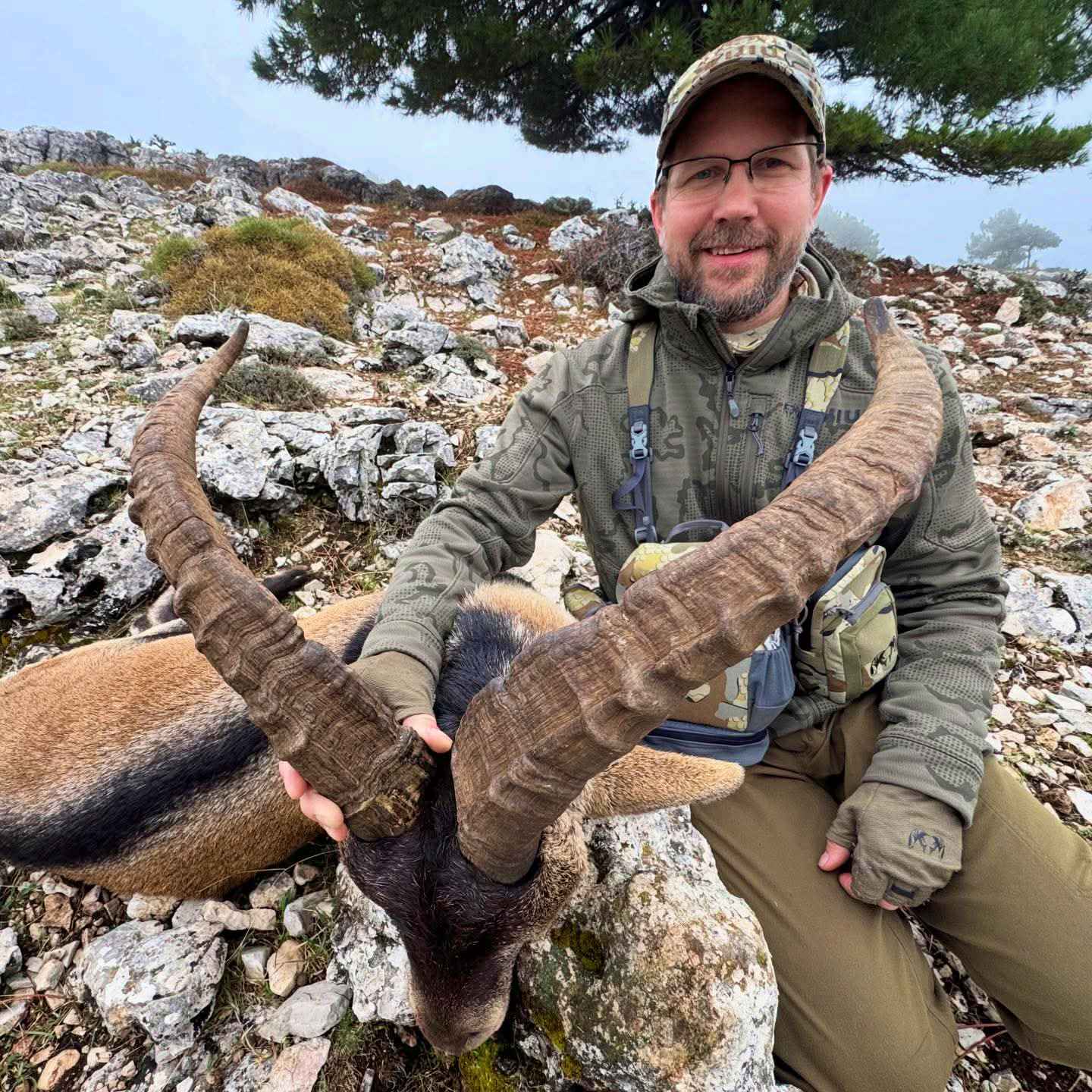
After reaching the highest region of where we were hunting, there was absolute silence in the air making every step important in the terrain covered with loose rocks to keep from spooking any game. Additionally, with only occasional trees, keeping a low profile was essential. After reaching the extent of where we would be able to hunt, we decided to start backtracking when all of a sudden, a bedded male stood up likely from hearing our approach. He was just over the next rolling section of rocks and required that I sneak in on my hands and knees to get into position. My guide had set up sticks for me to shoot from however for me to move just those 2 steps forward to set up, he likely would have took off running. At only approximately 50 yards away, an offhand shot was the better option and delivered a perfect shot for him to expire only 30 yards from where he initially stood. I immediately noticed differences between the Beceite I took earlier in the day and the Southeastern including a much softer coat, more distinct separation in the lighter and dark color areas of the hair and a generally overall lighter appearance in the Southeastern subspecies.
Siles: A Mountain Town Steeped in Hunting Tradition
As nightfall approached, we made our way to the small town of Siles where we would meet up with Dani to discuss our next plans for Red Deer. We got settled into our hotel which were small accommodations typical of a stay in Europe. The decor however was spectacular with brickwork designed to mirror the shape of Ibex horns and multiple euro mounts for red deer, Ibex and wild boar. We’d spend the next day on our own in town to explore before heading to our next destination for the final goal of our trip, Red Deer. Siles is a small beautiful mountainside town surrounded by olive farms making for an enjoyable quiet stay in town.
We frequented a local restaurant for lunch and dinner which was prearranged to take care of all our food and drinks. Being a hotspot for local hunters, we found ourselves in conversation about their evening with family and friends continuing the tradition of the Monteria (traditional Spanish driven hunt). Seeing the multiple generations celebrating their hunt was an exciting and reassuring sight to see. And while language barriers were at hand, the love for the pursuit of game (and some help from live google translate) brought us all together for an evening where we felt welcomed and appreciated as visitors. Before leaving town the following morning for Andújar I made sure to pick up a healthy supply of the local olive oil to bring back home.
From Ibex to Red Deer
The Red Deer hunt was going to be more challenging since the rut occurs in the prior months however there was a good population established in the area. After meeting up with Dani, saying goodbye to Moisés and quickly settling into our accommodations, we set out to hunt the remainder of the morning. We spotted several females and worked our way in on a male which was still roaring however did not turn out to be big enough.
Jeff’s Red Deer Success
After a filling lunch of roasted chicken, potatoes, carrots and salad, we finished settling into our accommodations, took a siesta and then set out for our evening hunt where Jeff would harvest a very nice stag just before nightfall using Dani’s Bergara chambered in 6.5 PRC.
The Final Push for a Stag
The following morning after a quick breakfast, we set out to continue our hunt. After a bit of driving we stopped to hike a mountain side in an area where some larger stag were known to frequent. While we didn’t see any Red Deer, the climb was very enjoyable as we found one smaller red deer shed and spent some time watching a male and two female Mouflon sheep. As a lover and collector of all things in nature, I’m always keeping an eye out while in the wilderness for all sorts of unique specimens including rocks, gemstones, insects, plants, feathers, etc. I have just as much fun doing that as the hunt itself. Between the rocks I picked up on this trip as well as the supply of olive oil, my luggage was certainly going to be close to the weight limit.
With only the evening and following morning to hunt before our departure, the pressure was on to make sure I moved as efficiently, quietly and shot well on any ethical opportunity at a good stag. Early in our evening hunt, a very nice stag was seen feeding on the higher branches in a tree, but unfortunately, I could only get a view of his head and antlers with all of the understory blocking any view for a shot. My heart sank as he stopped feeding and disappeared into the distance. At this point, I had accepted the possibility I would go home without a red deer and took pleasure in the success I had this far into the trip.
Golden Hour and a Second Shot
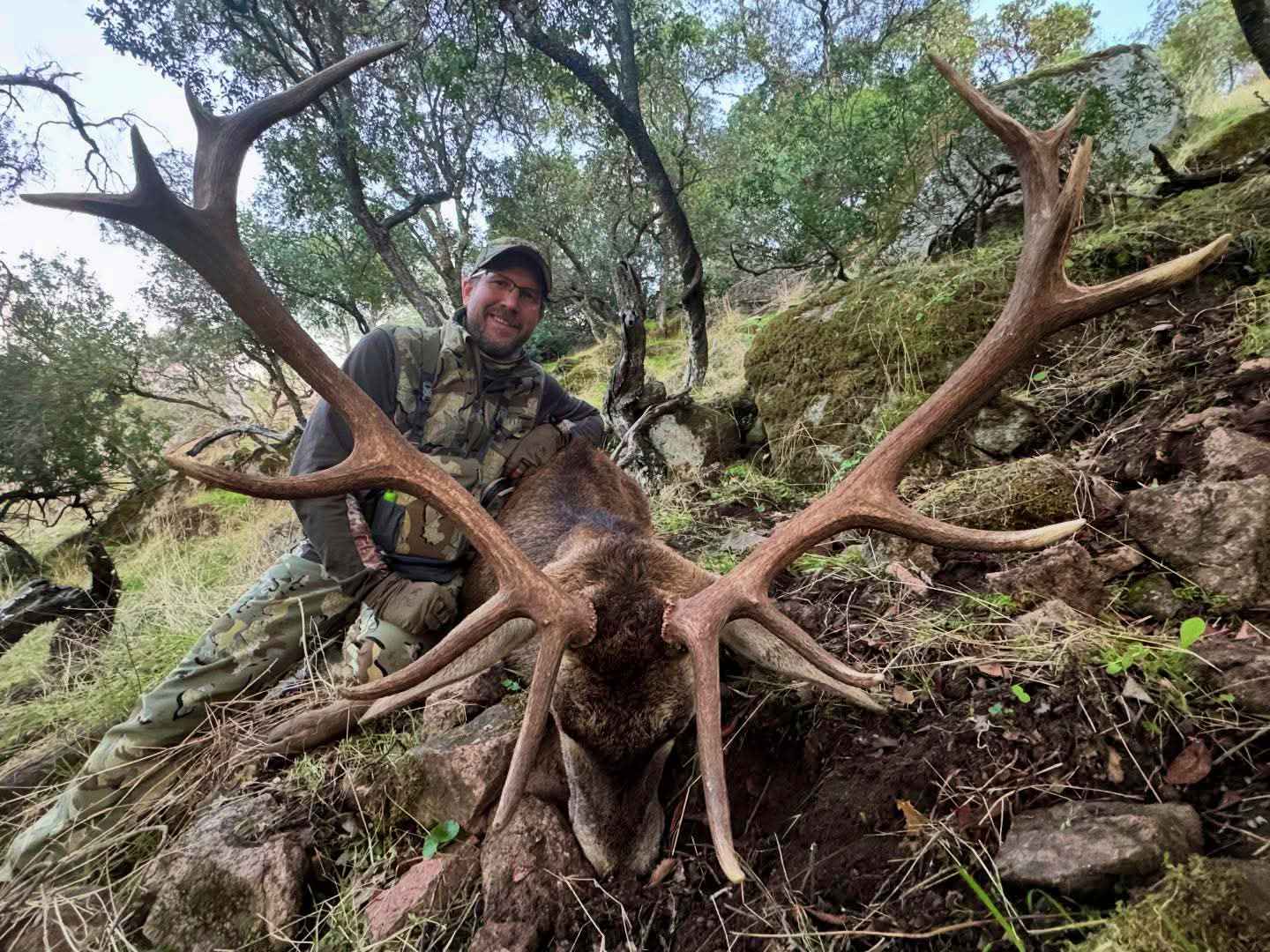
After a few hours into the evening of driving, hiking and not finding any other opportunities, light started fading and the golden hour of light appeared, we found a large stag with a female across to the next mountain side at about 350 yards. I set up as quickly as I could and found myself in an awful position for a comfortable shot. I couldn’t sit. I couldn’t stand. I had to try and steady myself squatting and after getting as settled as possible, I took my shot and knew immediately I wasn’t happy with my follow through. I immediately racked another round and took a follow up shot that felt perfect. We saw him head behind some large boulders into some heavy cover before disappearing. Since we did not see him go down, we carefully made our way down and back up the mountainside to where we had last seen him. To much relief, both shots were well placed and he went down immediately after we lost sight of him.
Celebrating the Hunt and Looking Ahead
After taking care of the after the shot work and getting my stag loaded, skinned and prepared, nightfall had come and it was a dark hike back to our vehicle. We headed back to our accommodations for an amazing celebratory evening in the Boma (open-air entertainment and dining area inspired by South African tradition). We enjoyed an amazing red deer Shepards pie, wonderful Spanish wine and great conversation at the campfire.
It was a fantastic end to an amazing hunt and I would very much enjoy returning to Spain to hunt again with Dani and Caza Sopié y Sabana. There are plenty of additional hunting opportunities in the country including 2 more types of Ibex (Gredos and Ronda), Roe Deer, Boar, and Fallow Deer to name a few.
Join SCI TODAY!
Safari Club International is the leading voice in the fight to protect the freedom to hunt, both in the United States and internationally. The SCI Departments of Legal Advocacy Resources and International Affairs and Government Relations are headquartered in Washington, D.C., advocating on behalf of SCI members and non-members alike. From staff dedicated to legislation and policy to a team of litigators, SCI hunter advocacy is at the forefront of protecting the hunting heritage. SCI and the SCI Foundation provide the voice of the hunter in treaties that affect hunting and wildlife conservation worldwide. This is where SCI and SCI Foundation go beyond what other hunter organizations do and why their work in this arena is critical to preserving the right to hunt. Plus, we have lots of fun and events like this one!
To find out more information about SCI and join our chapter, click below: